Posts

2022


Law and Policy Recommendations for Ransomware in the United States - Term Paper

·10 mins

It is difficult to ignore how the internet has now made it possible to cause harm in a digital environment (McGovern, 2018). According to Western interpretations of proper jurisprudence and social contract theory, individuals gain safety from legal protections that otherwise would not exist without government regulation, surveillance, intervention, and punishment. In the United States of America, the Constitution and Bill of Rights have served as ethical architecture and scaffolding in the physical world reasonably well since their ratification in 1788. However, due to the unrelenting nature of change, new technologies have since emerged that now question how legal standards such as the First Amendment and a Right to Privacy ought to apply in the modern world. Today, societies must respond and equip themselves with new laws and regulations that better anticipate cyber threats in-advance and proactively take steps to defend against criminal behavior in a challenging and constantly evolving online environment.
What is a Reverse Shell? Implications for Log4j Vulnerability.

·4 mins

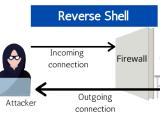
Once a vulnerability is discovered in any given IT system, one common payload a malicious attacker often wants to deliver is a reverse shell. From the black-hat attacker’s perspective, he or she wants to establish remote command-line access on the server-side of a victim’s business network. But what is a “shell?” And why is it considered “reverse?” I will explore these questions in the following brief discussion on the topic.

General Data Protection Regulation (GDPR) - The Law, Ethics, and its Fines

·7 mins

In today’s modern tech-centered business environment, corporations like Facebook, Google, and Amazon have collected extensive analytics of users’ online digital behavior in order to build, maintain, and increase their market caps. Public scandals such as Facebook’s voluntary involvement with Cambridge Analytica clearly reveal that businesses have enormous financial incentives to gather, store, and sell the personally identifiable information of end users. Historically, the legal guidelines surrounding the processing of users’ personal data has been lax. However, in response to this growing list of privacy concerns, European lawmakers passed and codified the General Data Protection Regulation (GDPR) on May 25th, 2018.

Nmap - Overview and Use in Reconnaissance and Asset Enumeration

·3 mins

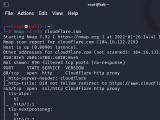
Nmap is an extremely powerful, free and open-source network mapping utility that can be used for many purposes. In this post, I provide a brief overview of what Nmap can be used for in the cybersecurity industry. These various and useful functions include determining what hosts exist on a network, what services those hosts may offer, and what operating systems (and OS versions) may be running on the backend. Nmap can also scan information about firewalls and potentially also how to evade them. All of this information is acquired across whichever devices respond in the scanned range of IP addresses.

How to write Python scripts that read arguments from the Command line

·2 mins

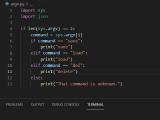
In this writeup, I will cover how a custom script in python “knows” to read text input by the user written at the command line. In line 1, the sys module is first imported. This makes all functions defined within the sys module available to the namespace of the rest of our program.

The dot operator accesses the “argv” property contained within the sys module, and this value is stored in the “message” variable. Then, when we print this variable, python returns a list object with 3 indexes. The string ‘argv.py’ is contained at the [0] index, ‘hello’ at the [1] index, and ‘everyone!’ at the [2] index.